Best Music For Dogs And Cats: What Actually Helps Them Relax?
If you are looking for the best music for dogs or cats to help them relax when home alone, the answer is not as simple as pressing play.
Most of us have done it.
You are heading out the door, and just before you leave, you turn on the TV or put some music on for your dog or cat.
It feels like the right thing to do. A bit of background noise. Something to keep them company.
But have you ever stopped and wondered whether your pet actually enjoys it, or whether it just makes us feel better?
If you are looking for the best music for dogs and cats, especially to help them relax when home alone, the answer is not quite as simple as pressing play.

Do Dogs And Cats Actually Like Music?
Dogs and cats respond strongly to sound, but they do not experience music in the same way we do.
They are not listening for lyrics or enjoying a favourite chorus. Instead, they respond more to rhythm, tone, volume, pitch, and frequency.
Research in shelter dogs found that heavier music increased restlessness, while classical music helped dogs settle.
view study
More recent research from the University of Glasgow found that when music was played, dogs spent more time lying down and less time standing, suggesting a more relaxed state. However, the effect tended to wear off over time as dogs became used to the sound.
view study.
This research did show that dogs habituate to the music quickly, so the effect was short-term unless you mixed up the beats!
When looking at the research into what music cats enjoy, the findings were very similar.
What Is The Best Calming Music For Dogs
The best calming music for dogs is usually slow, steady, and predictable.
Many dogs appear to settle better with music that has a slower tempo and does not include sudden loud changes.
Good options to try include:
- Classical music
- Soft rock
- Reggae
- Gentle pop
- Low-volume instrumental music
- Calm voice-based podcasts
As a simple guide, music around 60 to 80 beats per minute may be more relaxing for some dogs because it sits closer to a calm resting rhythm.
Music that is played at a beat of between 60 to 80 beats per minute can help a dog relax
We need to remember that just because we like a particular genre of music it doesn’t mean that our dogs will enjoy the same. In fact, it may actually create or add to the stress!
What Is The Best Music For Cats?
Cats can be more sensitive to sound than dogs, so volume matters.
The best music for cats is usually soft, steady, and low in intensity. Loud music, sharp sounds, or unpredictable changes may be stressful rather than soothing.
Good options to try include:
- Soft instrumental music
- Low-volume classical music
- Cat-specific relaxation playlists
- Gentle nature sounds
- Calm background sound rather than loud music
Quick Picks: What To Play For Your Pet
| Pet | Best option | What to avoid |
|---|---|---|
| Dog | Classical, soft rock, reggae, calm podcasts | Heavy rock, loud music, sudden volume changes |
| Cat | Soft instrumental music, calm nature sounds, low-volume playlists | High-pitched, loud, unpredictable sounds |
| Anxious pet | Low, steady background sound combined with behaviour support | Using music as the only solution |
Do Animal’s Hear Music Like Us?
Listening to music is a pastime that many of us enjoy. But, can we say the same for our pets?
What we do know is that animals don’t hear music in the same way that we do.
Music designed for us often has vocal ranges, pitch, tone, frequency, and rate that create a melody that just doesn’t appeal to our pets.
Our animals also can’t appreciate relative pitch – which is kind of lucky and why they don’t seem to care if we sing out of tune.
Music and sounds that do appeal to our pets are often composed at a lower frequency and at a tempo that is very similar to their resting heart rate. It is likely that the actual pitch we hear has no effect whatsoever and this is why talking in monotone may drive us batty, but for our pets can be beneficial.
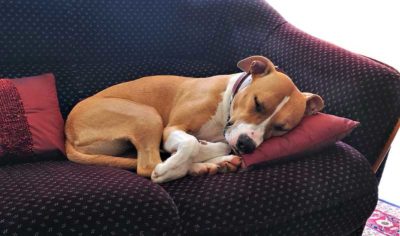
Can Music Help Dogs With Separation Anxiety?
Music may help create a calmer background environment, especially by masking sudden noises from outside.
But music alone will not fix separation anxiety in dogs.
Separation anxiety is a behavioural condition that often needs a structured plan. That may include training, environmental changes, routine adjustments, and in some cases veterinary support and medication.
If your dog is pacing, barking, howling, destroying things, toileting inside, or becoming distressed when left alone, it is worth reading our vet-backed guide to separation anxiety in dogs.
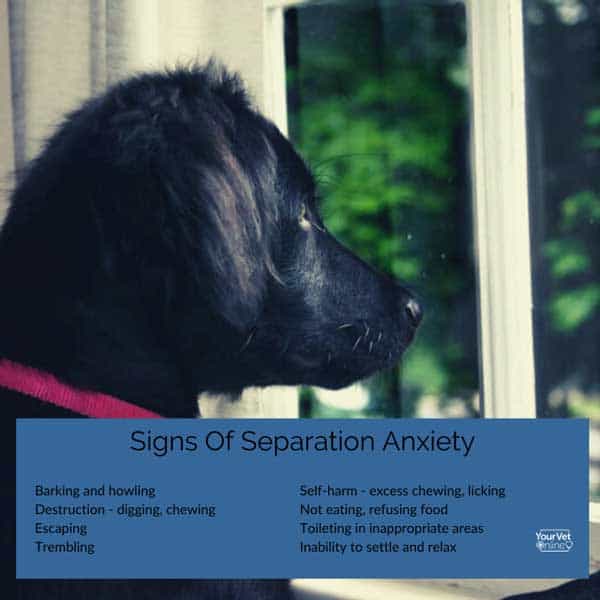
Signs Of Separation Anxiety
Why Music Does Not Always Work
Some pets relax beautifully with music.
Others ignore it completely.
And some may settle at first, then stop responding once the sound becomes familiar.
This is called habituation. It simply means your pet gets used to the sound, so it no longer has the same calming effect.
That is why it can help to rotate between a few calm playlists or alternate between soft music and calm voice-based sound.
Try This At Home
Choose a quiet time and play soft music at a low volume for 10 to 15 minutes.
Watch your pet’s body language.
- Are they lying down?
- Are they pacing?
- Are their ears relaxed?
- Are they looking more settled or more alert?
Your pet’s behaviour will tell you more than the playlist title.
Should You Leave Music On For Your Pet?
Yes, if your pet responds well to it.
Think of music as part of the environment, not a cure-all.
Keep it:
- Low volume
- Calm
- Predictable
- Free from sudden loud changes
If your pet is relaxed, resting, and calm, music may be a helpful tool.
If your pet is distressed when you leave, music may help a little, but they may need more support.
What to Play for Your Pet
Spotify, in conjunction with researchers, has developed a podcast that helps to create a calming environment for our pets.
The podcast ‘My Dog’s Favourite Podcast’ has an option of either a male or female voice and offers up to 5 hours of play at a time. It provides a combination of voice narration with calming music.
Other pet music options include:
For calming dogs
- Classical music playlists
- Soft rock or reggae
- “Relax My Dog” (YouTube)
For cats
- Low frequency, slow tempo sounds
- “Relax My Cat”
- Soft instrumental music
If your pet is anxious
- Try voice-based content like podcasts
- e.g. “My Dog’s Favourite Podcast”
Final Thoughts
The best music for dogs and cats is not always the music we enjoy most.
For pets, calming sound is usually slow, steady, and gentle.
Try a few options, watch how your pet responds, and adjust from there.
And if your dog is showing signs of distress when left alone, do not rely on music alone. Start by learning more about separation anxiety in dogs and when to get help.
Frequently Asked Questions
What is the best music for dogs when home alone?
The best music for dogs when home alone is usually slow, calm, and low in volume. Classical music, soft rock, reggae, and calm podcasts may help some dogs relax.
Does calming music for dogs really work?
Calming music can help some dogs settle, but it does not work for every dog. It may be most useful as part of a broader calming routine.
Can music help dogs with separation anxiety?
Music can help create a calmer environment, but it will not fix separation anxiety on its own. Dogs with separation anxiety usually need a structured behaviour plan and sometimes veterinary support.
Do cats like music?
Some cats may respond well to soft, low-volume music or calm background sounds. Cats are often sensitive to sound, so loud or unpredictable music may be stressful.
Should I leave the TV on for my dog or cat?
You can leave the TV on if your pet finds it calming, but keep the volume low. For some pets, steady music or a calm podcast may be a better option than TV because there are fewer sudden noises.
References
- Wells DL et al. (2002). The influence of auditory stimulation on dogs in rescue shelters.
View study
- Bowman A et al. (2017). Effect of music on dogs. University of Glasgow.
View study