
Crate Training a Puppy Makes Bringing Them Home Much Easier
Bringing home a new puppy is exciting, overwhelming, and, if we are honest, a little chaotic.
There is the cuteness. Then the toilet training. Then the chewing. Then more cuteness.
For most people, crate training a puppy is not exactly top of mind in those early days. It certainly was not for me. I had always thought it seemed a bit mean. The idea of putting a tiny, fluffy puppy in what looked like a cage did not sit that well.
But after chatting with Dr Leigh and hearing from a few other dog owners, I thought I would at least give it a go.
Now I am very much eating my words.
It has honestly made life so much easier.
If you are on the fence about crate training, here is what I found from actually living it with a new puppy.

What Crate Training A Puppy Actually Does
Before trying it, I assumed crate training was about keeping a puppy contained.
It is not.
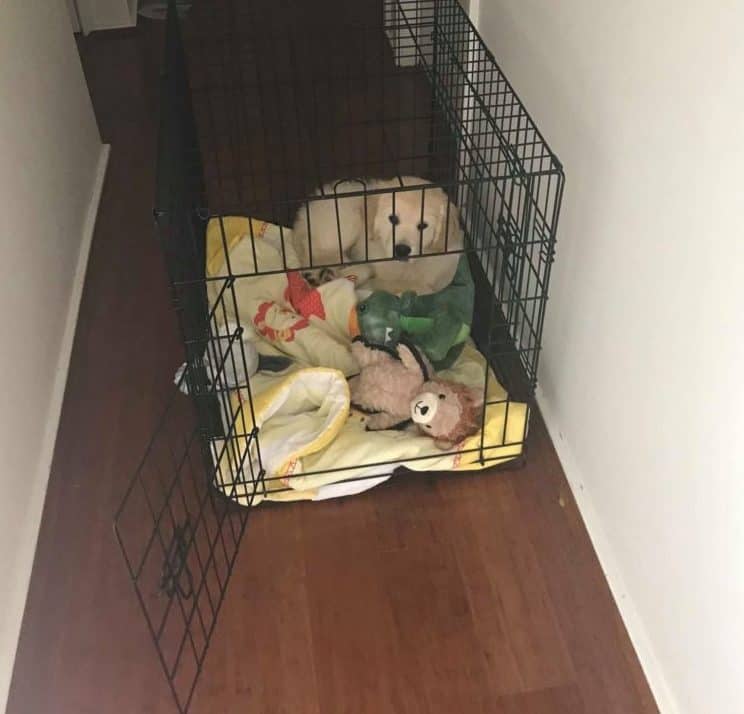
When you introduce it properly, the crate becomes more like their own little space. Somewhere safe, quiet, and predictable.
Dogs naturally like having a den. Once our puppy got used to it, the crate became the place he would go to settle, not somewhere he was forced into.
The key is that it is always linked to:
- rest
- calm
- feeling safe
Not punishment.
Why Crate Training Made Everything Easier
A safe place to escape to
Puppies get overwhelmed. Ours definitely did.
With kids, noise, and general chaos, having a space he could retreat to made a big difference. It became his spot, and the kids quickly learned that when he was in there, he was off-limits.
Toilet training was so much more predictable
This was probably the biggest win.
Crate training a puppy helps with toilet training because they naturally try not to mess where they sleep.
That meant fewer accidents and a clearer routine.
Of course, you still have to do your part:
- Take them out to the toilet regularly
- Listen when they wake or make noise
- Don’t leave them in there too long
But overall, it just made things easier to manage.
The house survived
Puppies chew everything.
Shoes, cushions, furniture. Nothing is safe.
Being able to use the crate for short periods when I had to duck out or do school pick up meant I was not coming home to complete destruction.
We would take him outside, then he would happily go into the crate while I was out for an hour or so.
If you want a step-by-step guide, read our detailed article on how to crate train a dog.
Nights were actually manageable
The first few nights with a puppy can be rough.
Having the crate gave him a consistent place to sleep, which helped him settle much quicker than I expected.
We started with it in the bedroom, then gradually moved it further away, the goal being for him to sleep in the laundry with his fur sister, Lizzie.
Before long, he was sleeping through most of the night, with an early morning trip outside.

He Goes In The Crate In The Car
For our other dog, we restrain with a short lead in the car, but transporting the pup in the crate is so much easier.
He’s happy to go in, and there are no struggles.
It made everything else easier too
Once he was comfortable in the crate, it helped with other things I had not really thought about.
Car trips were easier. Vet visits were less stressful. Even being in new places felt less overwhelming for him because he had somewhere familiar.
Using a crate for our pup has been a lifesaver for my frantic lifestyle.
Is crate training a puppy cruel?
I get why people ask this, because I thought the same thing.
But when it is done properly, it is not cruel at all.
The problems happen when:
- puppies are left in there for too long
- the crate is used as punishment
- everything is rushed
When you take your time with it, most puppies end up choosing to go into their crate on their own.
If You are Thinking About Crate Training
Keep it simple:
- introduce it slowly
- use treats and encouragement
- keep things short to start with
- never force your puppy in
The goal is not to make them tolerate it. It is to make them feel comfortable there.
You can also see some quick crate training tips on our video page.
My Final Thoughts
Crate training a puppy is not something I thought I would be recommending, but here we are.
It does not fix everything, but it makes those early weeks a lot more manageable.
For us, it helped with toilet training, sleep, and just generally keeping some level of order in the chaos.
If you are bringing home a puppy, it is definitely worth considering.
If you have crate trained your puppy, I would love to hear how it went for you – let us know in the comments.
