News

dog looking at your vet online website

Explore our Vet-Written Guides

Looking for more detailed, evidence-based information? Our Vet Guides cover diagnosis, treatment options, and what to expect for your pet.

  • heart disease monitoring

    Monitor Your Cat’s or Dog’s Heart ConditionWritten by Dr Leigh Davidson BVSc, BApplSc [easy-social-share] Heart disease in our pets is nearly as common as it is in us humans. It can also occur with little warning. Keeping an eye on your pet is crucial when they have heart disease and also as they get older [...]

  • learn how to manage heart disease in dogs and cats

    How To Recognise & Manage Heart Disease In Dogs & CatsWritten by Dr Leigh Davidson BVSc, BApplSc Heart disease or heart failure is a common cause of death in our pets. Often it has gone unrecognised for quite some time because owners aren’t familiar with the signs and symptoms of heart disease. In this video [...]

  • equine dentistry tutorial how to care for your horse's teeth and mouth

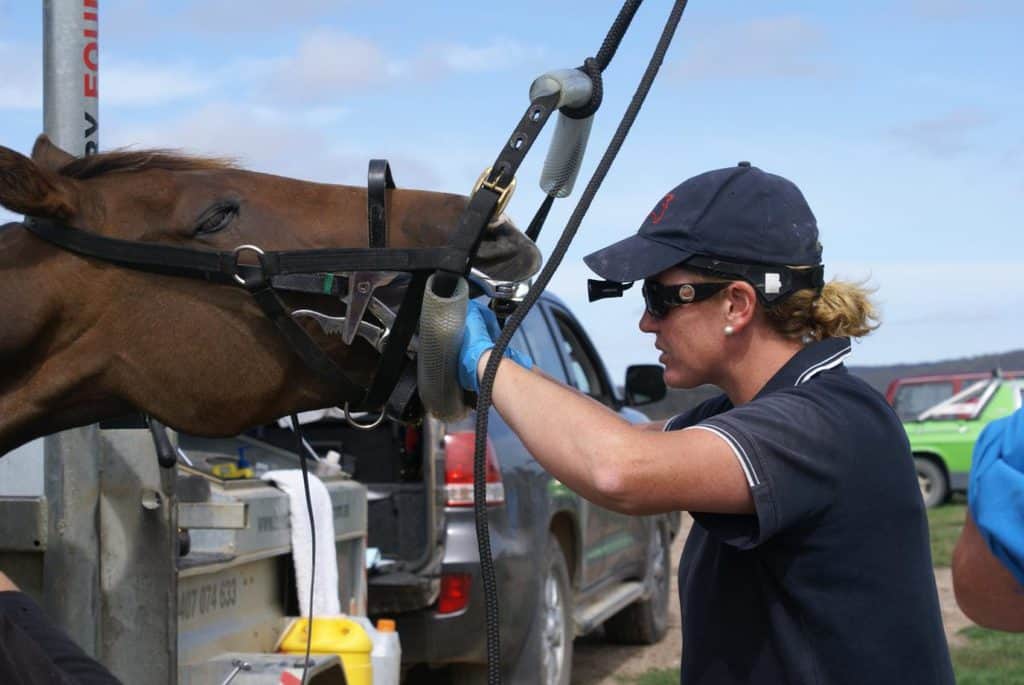
    Equine Dentistry: How To Care For Your Horse’s TeethWritten by Dr Leigh Davidson BVSc, BApplSc [easy-social-share] In this tutorial, Dr Leigh speaks with equine dental vet Dr Olivia James BVSc(hons) MANZCVSc (Eq dentistry) Diplomate ICEVO CMAVA of Australian Veterinary Equine Dentistry, all about equine dentistry. Horses differ from us and many other animals in that their [...]

  • oestrus manipulation fillies and mares

    Oestrus Manipulation For Fillies And Mares With Behavioural IssuesWritten by Dr Leigh Davidson BVSc, BApplSc [easy-social-share] Moody problem mares can create huge frustration for owners, riders and trainers alike. Trying to diagnose the real issue can be time-consuming and expensive. Understanding the mare’s reproductive cycle and what normal oestrus behaviour looks like during this time [...]

  • Keeping your pets teeth healthy

    Hey Doc: What’s The Best Teeth Care For My Pet?Written by Dr Leigh Davidson BVSc, BApplSc [easy-social-share] Teeth care for our pets is the topic for this tutorial. Dr Leigh is joined by Dr Aaron Forsayeth from Advanced Animal Dentistry. This tutorial will cover: 1. Does my dog or cat need a dental cleaning? 2. [...]

  • online vet advice for cat dental care

    How To Improve Your Pet’s Dental Care At HomeWritten by Dr Leigh Davidson BVSc, BApplSc [easy-social-share] Our pet’s dental care needs to be a top priority because just like us, poor dental hygiene can lead to disease and ill-health. Over 85% of dogs and 70% of cats from the age of 3 years suffer from [...]

  • online vet tips for breeding your mare

    Breeding Your Mare: Tutorial With Dr Simon RobinsonWritten by Dr Leigh Davidson BVSc, BApplSc [easy-social-share] In this Hey Doc tutorial Dr Leigh speaks with guest, specialist equine reproduction vet Dr Simon Robinson from Victorian Equine Group, all about horse breeding tips for breeding your mare. Many of us would love to breed a foal so [...]

  • Why Pet Obesity Is A Problem For Your Dog & Cat

    [easy-social-share]

    Our world is in the midst of a pet obesity crisis and we are to blame. According to the Association for Pet Obesity Prevention (APOP), nearly 59 percent of cats and 54 percent of dogs suffer from obesity.

    The sad thing about this is that obesity is the greatest risk to our pets’ health and wellbeing that there is.

    Luckily for our pets, being overweight is a problem that can be easily remedied.

    In this article, we discuss the dangers of letting our dogs and cats become overweight, including the causes of obesity.

    Make sure you check out the dog and cat weight charts that are free to download. overweight dog lying on grass

    What Is Obesity

    Obesity is a nutritional health disease that is defined by excess body fat. Once an animal is over 15% of its optimal body weight, we define that animal as being overweight and up to 20% over as obese.

    Causes Of Obesity In Pets

    While there are some medical issues that can result in weight gain, these only account for around 5% of all animals who are overweight. The main cause of weight gain in dogs and cats is very simple: we are feeding them food that provides far too many calories for the amount of physical activity they do.

    “Oh no, do you mean we have to portion control the food we feed our pets?”

    Hehe….yes and no…we will talk a little more about this later.
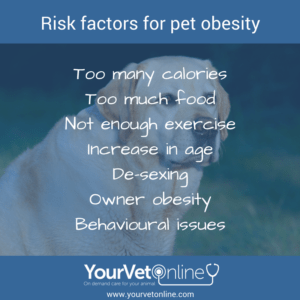
     

    slide of fat dog risk factors for obesity in dogs and cats

    Risk factors for pets developing weight issues.


    Along with too many calories, often the type of food can be an issue too.

    There appears to be a correlation between weight gain and inexpensive food and for cats, free-range feeding doesn’t help matters.

    Lack of physical exercise is the second major issue we see with many pets.

    Not only does exercise help provide mental enrichment it can help maintain and stabilise the weight of your pet.

    As animals age, it is natural for them to slow down, and that means for many, they physically can’t do the amount of activity that they once did.

    We, therefore, have to adjust what we feed to accommodate this. Research by Allaway et el, (2017) has shown that in cats, early desexing (spey or neuter) can help to modify potential weight gain later in life.

    Weight gain after desexing is due to an increase in food intake rather than a decrease in energy expenditure.

    We can’t blame hormones for this cause!

    Dare I say it but there does seem to be a correlation where owners who are overweight also own pets that are overweight.

    Whether this is a function of ‘too much love’, feeding too much or lack of exercise is unknown.

    What it does do though, is make it very difficult to have a discussion about weight loss.

    Some behaviours that our pets have can also lead to an increase in weight. The meowing by your cat at all hours of the night, only stopping when you feed is one such example.

    Why Is Pet Obesity A Problem?

    You may think vets are being pedantic, or even rude when we continually bring up your pet’s weight problem. We do this for a very good reason:

    Overweight pets do not live as long and are not as healthy as pets of ideal weight.

    A lifetime weight study of Labrador Retriever Dogs showed that dogs who were overweight lived two years less than dogs of acceptable weight.

    There are many health conditions that are exacerbated by being overweight.

    Take a look at this list that shows just how many diseases of cats and dogs are reported to be associated with obesity:

    Health Conditions Associated With Obesity

    Metabolic abnormalities
    Hyperlipidemia/dyslipidemia
    Insulin resistance
    Glucose intolerance
    Metabolic syndrome
    Hepatic lipidosis (cat)
    Endocrinopathies
    Hyperadrenocorticism
    Hypothyroidism
    Diabetes mellitus
    Insulinoma
    Hypopituitarism
    Hypothalamic lesions
    Orthopedic disorders
    Osteoarthritis
    Humeral condylar fractures
    Cranial cruciate ligament rupture
    Intervertebral disk disease
    Cardiorespiratory disease
    Tracheal collapse
    Brachycephalic airway obstruction syndrome
    Laryngeal paralysis
    Urogenital system
    Urethral sphincter mechanism incompetence
    Urolithiasis (calcium oxalate)
    Transitional cell carcinoma
    Dystocia
    Neoplasia
    Mammary
    Transitional cell carcinoma
    Functional alterations
    Joint disorders
    Respiratory compromise, e.g., dyspnea
    Hypertension
    Dystocia
    Exercise intolerance
    Heat intolerance/heat stroke
    Decreased immune functions
    Increased anesthetic risk
    Decreased lifespan

    A pretty long and exhausting list!

    Do you think your pet needs help to lose a few kilograms?

    Take a look at this video to assess your pet’s weight.

    You can download a body condition score sheet for your cat and dog to assess them at home.

    If you are worried, then get in touch…Dr Leigh is taking an 8 week Pet Fit Program to steer your pets into shape!

    This program gives you one-on-one personalised advice about nutrition for your pet over the course of 8 weeks.

    We want to see your pet living a longer and healthier life.

    Cat Body Condition Score Chart Dog Body Condition Score Chart

    If you want to learn more about how to help your pet lose weight then watch our tutorial: Top tips to help your dog or cat lose weight

    Tell us how you have helped your dog or cat to lose weight in the comments below!
     

  • top tips to help your pet lose weight

    Top Tips To Help Your Pet Lose WeightWritten by Dr Leigh Davidson BVSc, BApplSc [easy-social-share] Have you been told that your cat or dog is overweight? Perhaps your vet has given you the hard work – they must lose weight. Or maybe, you just need some reassurance that you are being the best pet parent [...]

  • get petsmart and watch tutorials from veterinarian dr leigh

    Hey Doc: Ask Dr Leigh Free Vet AdviceWritten by Dr Leigh Davidson BVSc, BApplSc Do you have a burning question about your animal’s health that you want answered? On the first Tuesday of every month Dr Leigh answers your questions for free in the series Hey Doc: Ask The Vet With Dr Leigh series. You’re [...]

advertorial asking to write for us with pictures of cat, dog, horse, rabbit and budgie